Kitchen knives


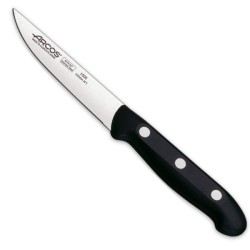

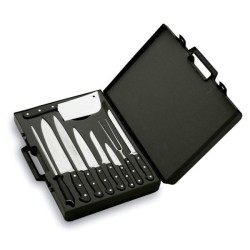

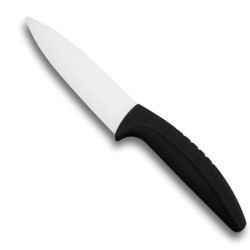
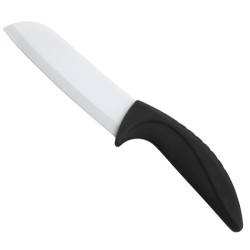
Find the perfect kitchen knife in Hiperchef's professional catalogue. A good knife is probably the most important tool in any kitchen. It makes the difference in every cut, every preparation and every service. Whether you are a professional chef or a demanding home cook, choosing the right knife in terms of material, shape and size is essential for working with precision, comfort and safety.
Types of kitchen knife
Each knife is designed for a specific job. Knowing the differences will help you choose exactly what you need and get the most out of it in your kitchen.
Chef's or cook's knife
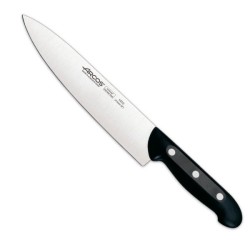
The chef's knife (also known as a cook's knife) is the most versatile of them all. With a curved blade of between 20 and 25 cm, it is used to chop, cut, fillet and slice almost any food. It is the first piece every cook should buy and the one most used day to day, in both home and professional kitchens.
Santoku knife
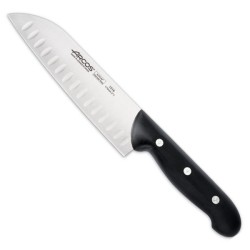
Of Japanese origin, the santoku knife has a wider, flatter blade (16-18 cm), designed for precise cuts of vegetables, fish and meat into thin slices. Its profile makes vertical cutting without a rocking motion easier, making it lighter and more manageable than the traditional chef's knife. Brands such as Global and Arcos offer leading santokus in high-performance steel.
Paring knife
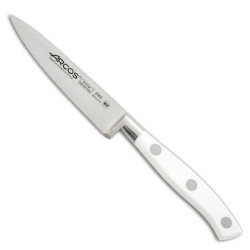
The paring knife (8-10 cm) is the essential companion to the chef's knife. It is used for precision work: peeling, turning, coring fruit, trimming small vegetables and making decorative cuts. Its small size allows total control of the edge.
Bread knife
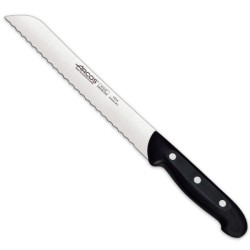
With its serrated or saw-toothed edge, the bread knife cuts all kinds of bread without crushing the crumb. It is also useful for cutting ripe tomatoes, cakes and other foods with a hard crust and soft interior.
Ham knife and boning knife
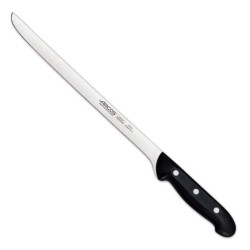
The ham knife has a long (24-30 cm), narrow and flexible blade, designed to obtain thin, uniform slices of jamón ibérico. The boning knife, with a rigid or semi-flexible 14-16 cm blade, is used to separate meat from the bone in meat and poultry. Both are essential in professional kitchens and in Spanish culinary culture.
Blade materials: how to choose the right steel
The blade material has a direct impact on the edge, durability and maintenance of the knife.
Stainless steel is the most widely used in professional kitchens for its corrosion resistance and easy maintenance. Arcos has developed its exclusive Nitrum steel, enriched with nitrogen, which offers greater hardness and edge retention. 3 Claveles works with high-quality stainless steels tempered to more than 50 HRC.
Carbon steel achieves a sharper, longer-lasting edge, but requires drying the blade after each use to prevent rusting. Ceramic knives keep their edge far longer and do not transfer smells or flavours, although they are more fragile against impacts and drops.
Knife care and maintenance
A well-maintained professional knife performs for years. Use a honing steel before or after each use to keep the edge aligned. Actual sharpening with a stone or sharpener is recommended every 2-4 months. Never put your knives in the dishwasher: the heat and detergents damage both the edge and the handles. For storage, opt for magnetic bars, wooden blocks or roll-up cases that protect the blades.
Buy professional kitchen knives at Hiperchef
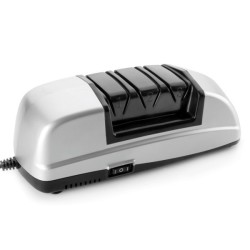
At Hiperchef we have been supplying professional cutlery to restaurants, hotels and kitchens across Spain since 1977. Our catalogue includes the most recognised brands in the sector: Arcos, 3 Claveles and Global. You will find individual knives, complete sets with a block or case, and all the maintenance accessories: honing steels, sharpening stones, electric sharpeners and magnetic holders.
Frequently asked questions about kitchen knives
Which kitchen knife do I need if I can only buy one?
If you had to choose a single knife, the chef's knife (between 20 and 25 cm) is the most versatile option. It is used to chop, cut, fillet and slice almost any food. Brands such as Arcos, 3 Claveles or Global offer professional models with excellent value for money. It is the essential tool in both home kitchens and restaurants.
What is the difference between a chef's knife and a santoku knife?
The chef's knife has a curved blade, ideal for the rocking motion when chopping, and usually measures between 20 and 30 cm. The santoku, of Japanese origin, has a wider, flatter blade (between 16 and 18 cm), intended for precise cuts of vegetables, fish and meat into thin slices. The santoku is lighter and more manageable, while the chef's knife is more versatile for Western techniques. At Hiperchef you will find both types from brands such as Arcos and Global.
Which blade material is best: stainless steel, carbon steel or ceramic?
Stainless steel is the most popular in professional kitchens for its corrosion resistance and easy maintenance; it is the main material of brands such as Arcos (with its Nitrum steel) and 3 Claveles. Carbon steel offers a sharper, longer-lasting edge, but requires drying after each use to prevent rusting. Ceramic knives keep their edge far longer and do not transfer smells, although they are more fragile against impacts. The choice depends on your level of use and how much maintenance you are willing to give them.
How often should I sharpen my knives and how do I do it correctly?
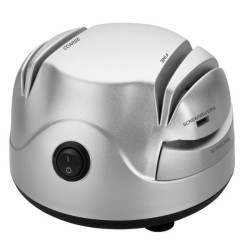
A professional knife should be honed with a steel before or after each service to keep the edge aligned. Actual sharpening (with a stone or electric sharpener) is recommended every 2-4 months depending on use. Avoid putting your knives through the dishwasher, as the heat and detergents damage the edge and the handles. At Hiperchef we stock honing steels, sharpening stones and electric sharpeners from brands such as Arcos, Lacor and Waring so your knives always perform at their best.
Which knife is best for cutting jamón ibérico?
To cut cured ham you need a ham knife with a long (between 24 and 30 cm), flexible, narrow blade with a smooth edge. The flexibility allows you to follow the contour of the bone and obtain thin, uniform slices. It is important to complement it with a paring or boning knife to clean the rind and work the areas close to the bone. You will find professional ham knives from Arcos and 3 Claveles, as well as ham holders from Boj to complete the set.
Is it worth buying a knife set or is it better to buy them separately?
If you are equipping a kitchen from scratch, a set usually offers a better price per piece and includes the essential knives: chef's, paring, bread and scissors. However, an experienced cook tends to prefer choosing each knife individually according to their needs and the type of cooking they do. At Hiperchef we offer both options: complete sets with a block or case and individual knives from brands such as Arcos, Global and 3 Claveles.
How do I store my knives so they last longer?
Never keep loose knives in a drawer: the blades knock against each other and quickly lose their edge. The best options are a wall-mounted magnetic bar, a wooden block or a roll-up case (ideal for cooks on the move). At Hiperchef you will find magnetic holders from Lacor and Paderno, as well as professional cases to protect your investment in cutlery.
Which basic knives does a professional kitchen need?
The minimum knife kit for a professional kitchen includes: a chef's knife (20-25 cm) for general cutting, a paring knife (8-10 cm) for precision work, a bread knife with a serrated edge, a boning knife for meat and a flexible filleting knife for fish. To this you should add a honing steel for daily maintenance and a safety cut-resistant glove. You will find all these knives at Hiperchef in the professional range from brands such as Arcos, 3 Claveles and Global.
Related posts

