Rolling pins



Rolling Pins
The rolling pin is the basic tool for rolling out any dough: bread, pizza, puff pastry, pasties, biscuits or fondant. At Hiperchef you will find rolling pins from Ibili, Lacor, Pujadas, Westmark, Kitchen Craft, Silikomart and Marcato in beechwood, stainless steel, non-stick and food-grade polyethylene, from the classic household rolling pin to professional bakery formats, as well as rolling pins with adjustable levelling rings, embossing rollers, croissant cutters and dough dockers.
Classic rolling pins
The beechwood ones are the traditional choice: Lacor makes them smooth in 43 and 50 cm lengths (4.4 and 4.8 cm in diameter) and with handles, and the Kitchen Craft Italian rolling pin is ideal for pizza bases and for rolling out pasta before passing it through the machine. If you want a larger working surface, the extra-wide Ibili rolling pin measures 43 cm long by 6.5 cm in diameter and turns on independent handles.
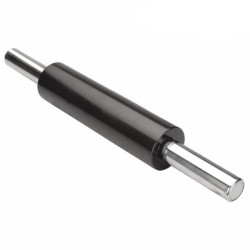
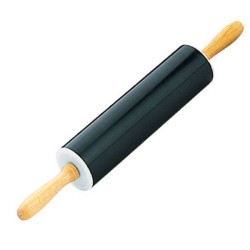
The non-stick ones save you from constantly flouring: the Ibili non-stick rolling pin measures 45 cm, with wooden grips and a body that rotates on its axle, and Lacor offers its steel version with a non-stick coating, 48 cm in total length (25 cm central body). For intensive professional use there are also food-grade polyethylene rolling pins, such as the 50 cm one from Lacor or the Pujadas one with a handle and a 60 cm body, a hygienic material you can wash without worry.
Rolling pins with levelling rings
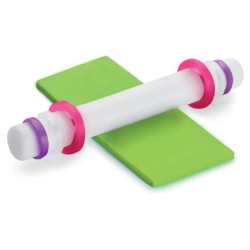
The removable rings or discs at the ends set the thickness of the dough to achieve a uniform depth from edge to edge. The Lacor beechwood rolling pin with rings rolls to 2, 6 or 10 mm and has a guide engraved into the wood for measuring the width; its 18/10 stainless steel sibling adds a fourth thickness (2, 3, 6 and 10 mm) with coloured discs. Ibili solves the same task with its levelling-ring rolling pin (3, 5 and 10 mm, which comes apart for cleaning) and with the levelling strips: a set of 3 pairs of 35 cm strips (3, 5 and 10 mm) between which you roll out the dough with any rolling pin.
Embossing and cutting rollers
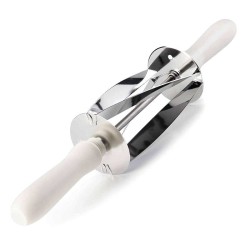
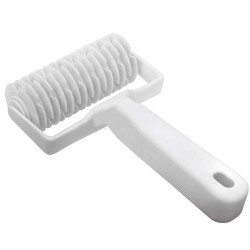
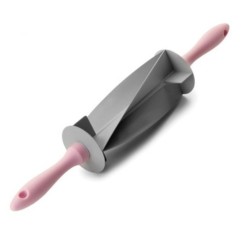
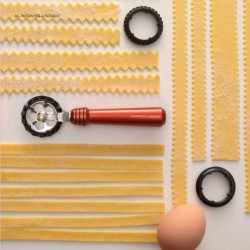
To shape and finish, there is a roller for every task: the Ibili diamond-pattern roller draws lattices on pasties and tarts, and the Seed embossing roller imprints a wheat-ear motif on the dough. The Ibili croissant cutter roller cuts triangles with 18 cm sides and a 10 cm base in a single pass (there is a mini 9x9 cm version), and the Marcato PastaWheel cutter cuts fresh pasta with a smooth or fluted edge.
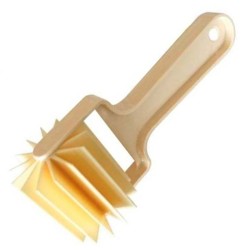
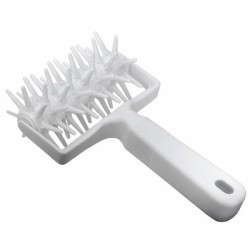
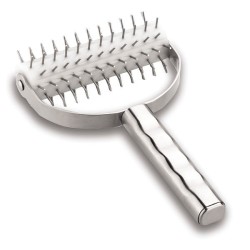
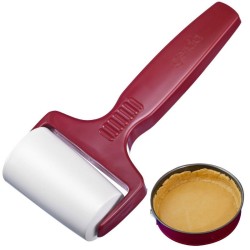
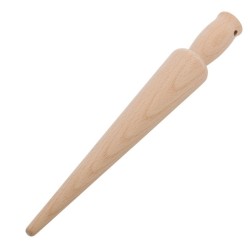
The dough dockers and perforating rollers prick the dough so it does not rise or bubble in the oven: in food-grade plastic (Ibili), in professional aluminium (Lacor) or with long spikes like the Pujadas docking roller, perfect for thin, crispy pizza crusts. The family is completed by the Silikomart strudel rolling pin (6 cm wide and 5 cm in diameter, it makes the typical cut for filled puff pastry), the Westmark conical rolling pin — made in Germany with a 5-year guarantee, its shape fits round tins so you can roll out the base directly inside — and the 28 cm untreated beechwood cone mould for rolling wafers and ice cream cones. And if you work with sticky doughs, the Ibili set of 2 fabric sleeves fits rolling pins of various sizes and stops the dough sticking.
How to choose your rolling pin
For bread, pizza and general use, a 43-50 cm beechwood rolling pin is the most versatile option. For fondant, marzipan and fine pastry, choose a non-stick pin or one with levelling rings, which guarantee an exact thickness. In a professional bakery, food-grade polyethylene withstands continuous work and intensive cleaning. And if you often bake biscuits, croissants or pizza, cutting rollers and dough dockers save you a great deal of time piece by piece.
Frequently asked questions about rolling pins
Wooden, non-stick or steel rolling pin?
Beechwood is the most versatile and the most pleasant to handle for bread doughs and general baking. Non-stick saves constant flouring and works very well with sticky doughs and fondant. Stainless steel and polyethylene are the professional-use materials: cool, hygienic and quick to clean.
What is a rolling pin with levelling rings?
A rolling pin with removable discs at the ends that act as a stop against the worktop: the dough is rolled out to a uniform, exact thickness (2 to 10 mm depending on the chosen disc). It is the easiest way to level fondant, biscuits or marzipan.
How do you clean and care for a wooden rolling pin?
Clean it by hand with a damp cloth and dry it straight away; wood must not be soaked or put in the dishwasher, because moisture warps it. Plastic rollers, such as the Ibili diamond-pattern one or the Silikomart strudel one, are dishwasher safe.
What is a dough docker for?
For pricking the dough before baking so it does not rise or form air bubbles. It glides gently over the rolled-out dough and airs the whole surface in one pass: essential for pizza bases, puff pastry and flat biscuits.
Which rolling pin should I use for fondant?
A non-stick one or one with levelling rings. With the rings (3, 5 or 10 mm on the Ibili model) you get a sheet of fondant of perfectly even thickness; the levelling strips achieve the same result with your usual rolling pin.
Find more tools in our baking utensils, metal baking tins and pasta machines, and discover the full range from Ibili, Lacor, Pujadas, Westmark, Kitchen Craft and Silikomart.