Mixers and dough kneaders



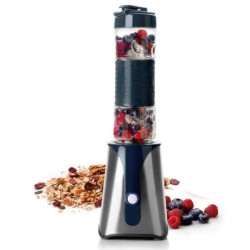
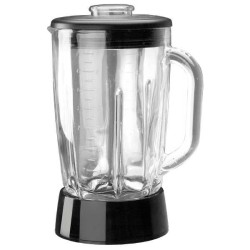
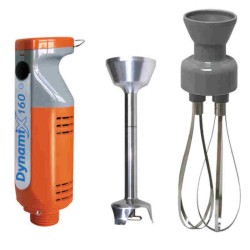
Commercial blenders and mixers are the backbone of the bakery, the café and the restaurant kitchen. In this category we bring together stick blenders, jug blenders, drink mixers, planetary mixers, spiral mixers and food processors from the most recognised brands in the catering sector, built for intensive production rates and backed by official technical support in Spain.
Types of commercial blender and mixer
Stick blenders (hand blenders)
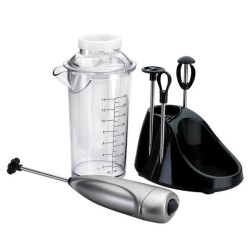
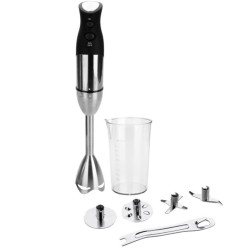
The stick blender —also known as a hand blender or immersion blender— is immersed directly in the pot or container and lets you blend, emulsify and whip up creams, sauces, mayonnaises, soups and purées. The commercial version features a high-power universal motor (from 250 W for small kitchens up to more than 1,000 W for semi-industrial production), a detachable stainless steel shaft in various lengths (from 200 mm to more than 600 mm) and hardened blades. It's the chef's most versatile tool thanks to its ability to work in large stockpots without transferring the contents.
Jug blenders
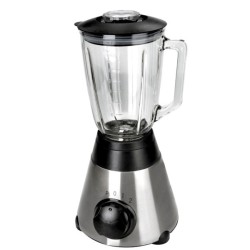
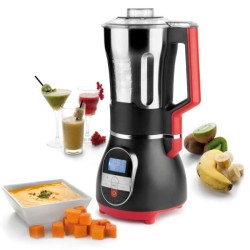
The jug blender uses a jug with blades in the base and a high-power motor (from 1 to 3 HP in commercial ranges). It's designed to crush ice and blend smoothies, frozen cocktails, frappés, sauces, gazpachos and large volumes of purée. Commercial models are fitted with durable polycarbonate or stainless steel jugs from 1.4 L to 4 L and multi-purpose blades. Brands such as Hamilton Beach and Waring are world leaders in this range.
Drink mixers and milkshake makers
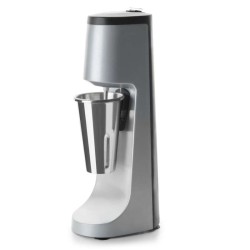
The drink mixer is a single-spindle vertical blender designed to prepare shakes, milkshakes, malted milk and creamy cocktails in ice cream parlours, bars and cafés. They come in one-, two- or three-cup formats with independent motors for fast service at the bar.
Planetary mixers (bowl-lift and tilt-head)
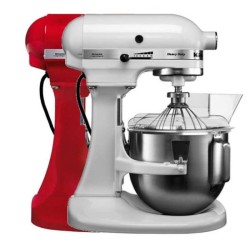
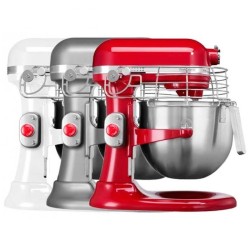
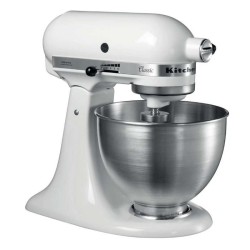
The planetary mixer combines rotation of the hook/whisk with an orbital movement around the fixed bowl, ensuring an even mix without the need to scrape down. It's used for soft and medium-stiff doughs, whipping cream and making meringues, sponge cakes and creams. It's the star mixer of patisserie and artisan bakery. They come in benchtop models (5-7 L for baking) and floor-standing models (10-20 L for the bakery).
Spiral and bakery mixers
The spiral mixer has a fixed hook and the bowl rotates on its own axis, which better respects gluten development in high-hydration doughs (breads, pizzas, brioches). It's the format preferred by commercial bakeries and pizzerias thanks to its load capacity (from 5 to 100 kg of dough) and gentleness with fermentation.
Cutters, emulsifiers and food processors
The cutter is a fast emulsifier with horizontal blades and a small-capacity bowl designed to chop, mix and emulsify forcemeats, pâté, hummus, sauces and dressings. The food processor adds interchangeable accessories (vegetable slicers, graters, mincers) and handles several jobs in a single machine.
How to choose a commercial blender or mixer
- Capacity and daily output: work out the litres of the jug or kilos of dough you'll process per service.
- Power and duty rating: universal or induction motor depending on hours of continuous work.
- Speeds and electronic control: top ranges offer soft start and torque control.
- Materials: stainless steel or food-grade polycarbonate jug/bowl, certified seals, and removable, dishwasher-safe parts that come into contact with food.
- Spare parts and technical support: prioritise brands with availability of jugs, blades, brushes and clutches for years to come.
Blender and mixer brands at Hiperchef
We work with the leading manufacturers in the professional sector: Dynamic (French stick blenders and emulsifiers, inventor of the category), Hamilton Beach (American jug blenders and drink mixers), Sammic (cutters, emulsifiers and stick blenders made in Spain), Waring (high-performance blenders), Lacor (mixers and blenders in an accessible commercial range), Ibili and Garhe (mixers and food processors for heavy-duty use).
Frequently asked questions about blenders and mixers
What's the difference between a stick blender and a jug blender?
The stick blender is immersed directly in the container and lets you work in large pots without transferring the contents; it's ideal for creams, sauces and emulsions. The jug blender has a fixed jug with blades in the base and a more powerful motor; it's the tool for crushing ice and blending smoothies, frozen cocktails and thick purées. In commercial kitchens they are complementary, not interchangeable.
How much power does a commercial blender need?
It depends on the use. For occasional service and light blending, 250-400 W is enough. For continuous work in medium pots, 400-750 W is recommended. For semi-industrial production or contract catering with large pots, commercial ranges rise to 1,000-1,500 W with an induction or reinforced universal motor. Commercial blenders are measured in HP: 2 HP is the standard for cocktail-making and ice cream, and 3 HP for high volume.
What's the difference between a planetary mixer and a spiral mixer?
In the planetary mixer the bowl is fixed and the hook (or whisk, or beater) performs an orbital movement, which makes it very versatile for doughs, creams, meringues and mixes. In the spiral mixer the hook is fixed and the bowl rotates: it respects the gluten better and is the preferred choice in commercial bakeries for high-hydration doughs such as bread, pizza or brioche. A patisserie can work with a planetary mixer; a bakery needs a spiral mixer.
How much dough can I knead in a commercial mixer?
Benchtop models for baking handle between 0.5 and 3 kg of dough. Commercial floor-standing planetary mixers reach 5-12 kg per batch. Bakery spiral mixers start at 5 kg and go up to 100 kg in medium-sized bakeries. The rule of thumb: never fill the bowl more than 60-70% of its capacity to ensure an even knead and avoid straining the motor.
Are commercial blenders and mixers suitable for home use?
Yes, with a caveat. A 7 L Lacor mixer or a Waring jug blender will work perfectly in a home kitchen with heavy use (home bakers, foodies). They are heavier, noisier and more expensive than the home ranges, but in return they offer a much longer service life, a repairable motor and spare parts for years. If you bake bread weekly at home, a small commercial spiral or planetary mixer is a good investment.
What guarantee and spare parts do these machines have?
The professional brands we distribute at Hiperchef come with an official manufacturer's guarantee (1-2 years on parts and labour depending on the brand) and an authorised technical support network in Spain. The most important thing in catering: availability of spare parts —jugs, blades, clutches, seals, motors— for at least 10 years, something guaranteed by Dynamic, Sammic and Hamilton Beach among others.
Related posts
