Pasta machines



Pasta machines
At Hiperchef, we are firmly committed to quality — and not only to quality but to great value too — which is why we choose manual fresh pasta rollers and cutters from the finest makers and apply generous discounts.
Among our selection of brands, we can highlight the outstanding quality of the Marcato pasta machines, quite possibly the finest fresh pasta machines in the world, made entirely in Italy.
We also work with Imperia, Gefu, Ibili and Lacor, one of the brands offering excellent value for money.
And as always, we try to keep permanent stock so that most of your orders reach you the next day.
What are pasta rolling machines for?
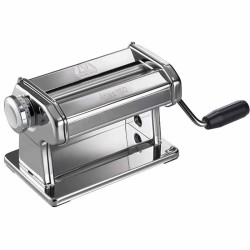
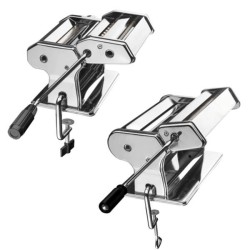
They make it easy to roll out pasta for cannelloni, lasagne and ravioli, or to prepare the dough for cutting with different attachments and cutters.
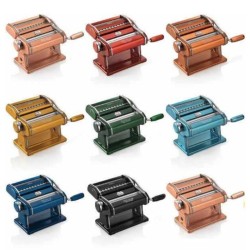
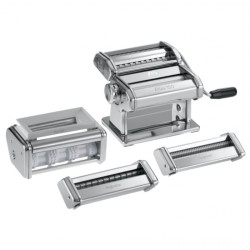
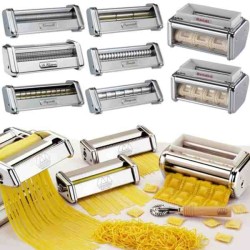
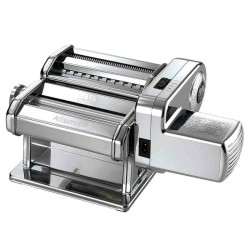
Marcato machines, genuine Italian machines, are completed with a wide variety of cutters for making many more types of pasta, such as spaghetti, pappardelle and the famous tagliatelle. Among machines of this kind, we must highlight the Atlas 150 in colours, made from an anodised aluminium alloy — you can see the quality the moment you look at them.
Another type of pasta machine: extruders
Not every type of pasta can be achieved with rollers and their cutters: to make pasta such as macaroni, bucatini or fusilli you need an extruder, which is simply a machine that forces the pasta under pressure through dies, producing shapes impossible to achieve by other methods.
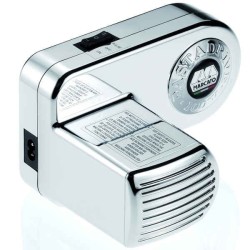
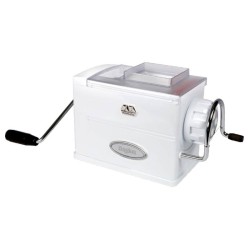
We have some electric ones as well as manual models; among the latter we highlight the quality of the Marcato Regina, made entirely in Italy, of course, like all other Marcato products.
Other accessories and utensils for fresh pasta
As well as pasta machines, in our online shop you can find many other accessories for making pasta.
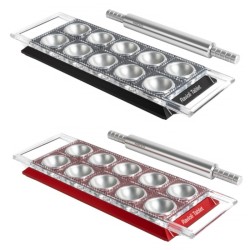
In our catalogue you can find ravioli moulds or plungers, also known as ravioli stamps, which we stock in different shapes and sizes: round, oval, triangular, square...
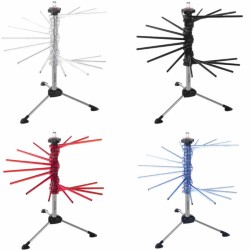
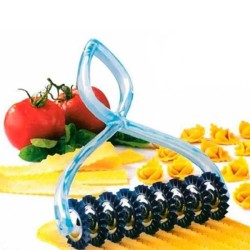
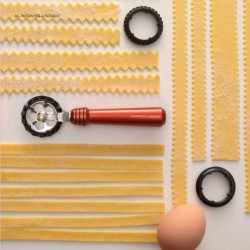
Additionally, ravioli boards, used together with the rollers, are another quick way to make large batches of this wonderful filled pasta. The pasta cutters, for making different pasta cuts. The tacapasta pasta racks, the fantastic driers for letting pasta rest without sticking together. And the flour dredgers (also for sugar, cocoa, etc.), which are a great help in any pasta preparation you undertake, or other tasks.
Pasta recipe books
Fresh pasta isn't especially difficult to make; however, like everything, it has its little tricks, and there's nothing better for learning than turning to a source of knowledge such as books.
At Hiperchef we have recipe books and food books aimed at both amateur cooks and catering professionals, as well as regional cookery books where you'll find various titles for making fresh pasta and pizza. Who knows, you might just find in one of them the trick you were missing for a perfect recipe.
Cleaning and maintenance of the fresh pasta machine;
Both the manual machines and the cutters need no great effort to clean and, contrary to what you might think, they aren't at all awkward to clean: you'll simply need a bristle brush that's a little stiffer than usual so that it sweeps away the flour residue well. That said, it's very important that when you use the roller and cutters the dough is properly made; otherwise you'll have to wait for the dough to dry thoroughly and clean it with more patience. In any case, above all never wash them under a tap, in the dishwasher or similar.
Frequently asked questions about pasta machines
What are pasta rolling machines for?
Pasta rolling machines are used to roll out fresh dough to a uniform thickness and, on most models, to cut it into different shapes (tagliatelle, fettuccine, spaghetti, lasagne). They produce a far finer and more even texture than a hand rolling pin and are the key tool for making home-made fresh pasta of professional quality.
What is the difference between a pasta rolling machine and a pasta extruder?
A rolling machine stretches the dough between two rollers and then cuts it into straight strips (tagliatelle, fettuccine, etc.); it's ideal for flat and filled pasta. An extruder kneads and pushes the dough through dies to produce hollow or moulded shapes (macaroni, rigatoni, fusilli, paccheri). To get started and for flat or filled pasta, a manual rolling machine is enough; for a variety of shapes, an extruder is the way to go.
Which pasta machine should I buy if I'm starting from scratch?
For home use or occasional catering, a manual Marcato (Atlas 150) or Imperia rolling machine is the most popular choice: it lasts for years, has attachments for different cuts and assembles without any fuss. For intensive use in restaurants, an electric Marcato or Imperia with a motor is the way to go or, if you're going to make extruded shapes, professional models such as the Pasta Express. A good manual rolling machine with an optional motor covers 90% of needs.
What accessories complement a pasta machine?
The most useful are: additional cutters for different cuts (spaghetti, pappardelle, ravioli), a ravioli board for filled pasta, a ravioli tray, round and fluted pastry cutters, a flour dredger and a drying rack or «tacapasta» so the cut pasta doesn't stick as it dries. Marcato and Imperia offer a wide catalogue compatible with their rolling machines.
How do you clean a fresh pasta machine?
Never wash pasta machines under the tap or in the dishwasher: water rusts the rollers and hardens the leftover dough inside the gears. The correct approach is to let the dough residue dry completely and remove it with a stiff-bristled brush or a cocktail stick. If the dough was well hydrated (not too sticky), the machine comes clean with very little effort. Occasionally you can wipe it with a slightly dampened cloth and dry it immediately.
Which flour is best for making fresh pasta?
The traditional Italian flour for pasta is 00, fine and low in protein; combined with durum wheat semolina («semolina rimacinata») it gives the classic texture. For egg pasta, mix 70% 00 flour + 30% semolina; for dried pasta such as orecchiette, 100% semolina. Ordinary wheat flour also works, but the pasta ends up less elastic and with less body.