Chopping boards




Find the perfect chopping board for your kitchen in the Hiperchef catalogue. From polyethylene boards with the HACCP colour code for catering to bamboo and rubberwood boards for presentation and service, we offer professional options for every need. A good chopping board protects your knives, ensures food hygiene and improves efficiency in daily cutting work.
Types of chopping board by material
The board's material determines its main use, its durability and how it performs in terms of hygiene and knife edges. Each material has its ideal context.
High-density polyethylene (HDPE) boards
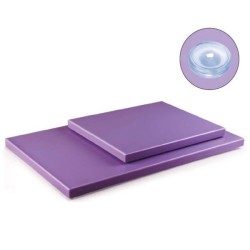
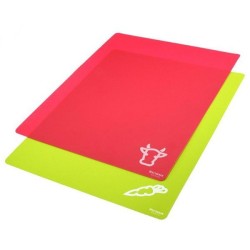
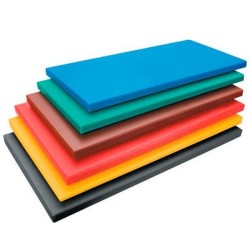
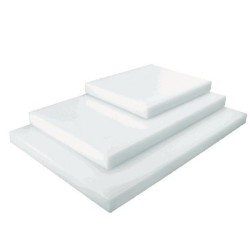
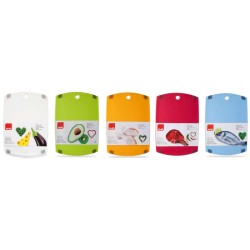
High-density polyethylene is the standard in professional kitchens and the material required by health regulations in catering. It is hard-wearing, non-porous, easy to disinfect (even in an industrial dishwasher) and does not alter the flavour of food. HDPE boards are available in the HACCP colour code to prevent cross-contamination: red for raw meat, blue for fish, green for fruit and vegetables, yellow for poultry, white for dairy and bread, and brown for cooked food. There is also the purple anti-allergen board for allergen-free food.
Wood and bamboo boards
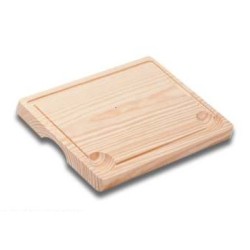
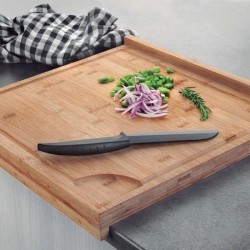
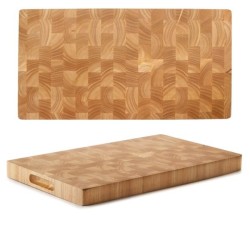
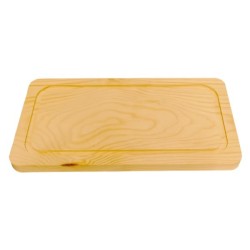
Wood (bamboo, rubberwood, beech) is the material kindest to knife edges. It absorbs the impact of cutting without damaging the blade, which extends the life of your knives. Rubberwood boards are especially valued by professional chefs for their balanced hardness and resistance to moisture. Bamboo boards stand out for their light weight, natural antibacterial properties and looks. In catering, wooden boards are mainly used for presentation and service (charcuterie, cheeses, breads, buffets), while for intensive cutting in the kitchen polyethylene is preferred for its ease of disinfection.
Stainless steel and titanium boards
Stainless steel and titanium boards represent the cutting edge in cutting surfaces. They are ultra-light, practically indestructible, fully hygienic and do not absorb odours or bacteria. They are ideal for professional kitchens seeking maximum durability and a modern design. Their smooth surface is kinder to the knife edge than glass or ceramic boards.
HACCP colour code for catering
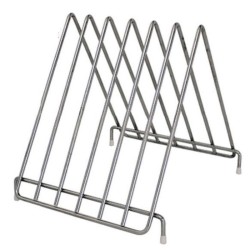
In any professional kitchen, preventing cross-contamination between raw and cooked foods is a basic health requirement. The colour-coded board system is the most practical and widely recognised way to meet this requirement: it is the method required by most health inspections and HACCP audits. Having a complete set of colour-coded boards, together with an organiser stand, demonstrates good practice and makes for tidy work in the kitchen.
Buy professional chopping boards
At Hiperchef we work with leading chopping board manufacturers: Lacor, with the widest range of HD polyethylene boards in every colour, plus bamboo, rubberwood and stainless steel boards; Ibili, with polyethylene and bamboo boards in domestic and professional formats; and De Buyer, with organiser stands and premium-range boards. Since 1977 we have equipped professional kitchens throughout Spain and we understand the hygiene and durability demands of daily work with chopping boards.
Frequently asked questions about chopping boards
Which material is best for a professional chopping board?
The high-density polyethylene (HDPE) is the standard in catering for its durability, ease of cleaning and compliance with health regulations. It is the material used by the colour-coded boards from Lacor and Ibili. Wood (bamboo, rubberwood, beech) is excellent for presentation and home cutting, as it is gentler on knife edges. As a new addition, there are stainless steel and titanium boards, ultra-light, practically indestructible and fully hygienic, ideal for professional kitchens seeking maximum durability and a cutting-edge design.
What do the colours of chopping boards mean in catering?
The HACCP (Hazard Analysis and Critical Control Points) colour code prevents cross-contamination between foods: red for raw meat, blue for raw fish, green for fruit and vegetables, yellow for raw poultry, white for dairy and bread, and brown for cooked food. At Hiperchef you will find HD polyethylene boards from Lacor and Ibili available in all these colours, including Lacor's purple anti-allergen board for allergen-free food.
What size of chopping board do I need?
For home use, a 30x20 cm board is enough for most tasks. In a professional kitchen, the recommended minimum is 40x30 cm (GN 1/1 format) to work comfortably and safely. If you cut large pieces of meat or fish, opt for boards of 50x30 cm or larger. Thickness also matters: thin boards (10 mm) are easier to handle for quick tasks, while those of 20 mm or more offer greater stability and durability in a heavy-duty environment.
How do you clean and disinfect chopping boards correctly?
Polyethylene boards are washed with hot water, soap and a brush, and can be disinfected with diluted food-safe bleach or in an industrial dishwasher. Wood and bamboo boards, such as Lacor's bamboo and rubberwood boards, must never be submerged or put in the dishwasher: clean them with a damp cloth and mild soap, and leave them to dry upright. To remove odours, rub the surface with lemon and coarse salt. In catering, regulations require boards to be disinfected after each change of food type.
How often should a chopping board be replaced?
When the surface has deep grooves, cracks or warping that prevent thorough cleaning, it is time to replace it. In a professional environment with daily use, polyethylene boards usually last between 6 months and 2 years depending on how intensively they are used. Solid wood boards, such as Lacor's rubberwood boards, last longer if they are kept oiled with food-grade mineral oil. Regularly checking the condition of your boards is a basic requirement of any HACCP plan.
Is it compulsory to use colour-coded boards in a restaurant?
Spanish health regulations do not literally require specific colours, but they do require preventing cross-contamination between raw and cooked foods. The colour-coded board system is the most practical and widely recognised way to meet this requirement, and it is the method required by most health inspections and HACCP audits. Having a complete set of colour-coded boards, together with an organiser stand such as the one from De Buyer, demonstrates good practice and makes work in the kitchen easier.
Are bamboo boards suitable for professional use?
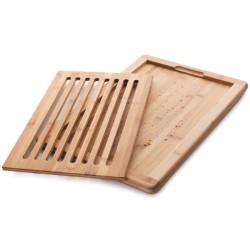
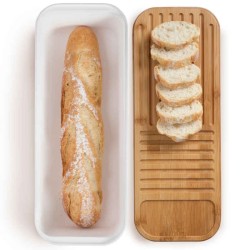
Bamboo is a hard-wearing, light material with natural antibacterial properties, but in catering its use is generally limited to presentation and service (charcuterie, cheeses, breads). For intensive cutting in a professional kitchen, high-density polyethylene remains the benchmark for its ease of disinfection. Lacor's bamboo boards, such as the dual board or the bread-cutting board, are ideal for buffets, table service and home kitchens where the natural look of the material is valued.
Which chopping board is kindest to knives?
Wood (especially soft woods such as rubberwood or beech) and polyethylene are the materials that wear the edge down the least. Lacor's rubberwood boards are especially valued by professional chefs because they absorb the impact of cutting without damaging the blade. Glass and ceramic boards are the ones that blunt knives the most. The new stainless steel and titanium boards offer a very hard but smooth surface that is kinder to the edge than glass. If you invest in quality knives, it is worth choosing a board that looks after the edge.
Related posts
